From 1 July 2026, Australia’s superannuation system will undergo one of its most significant reforms in decades.
Known as “Payday Super,” the changes will reshape how and when employers pay superannuation—creating both challenges and opportunities for small businesses.

What’s Changing?
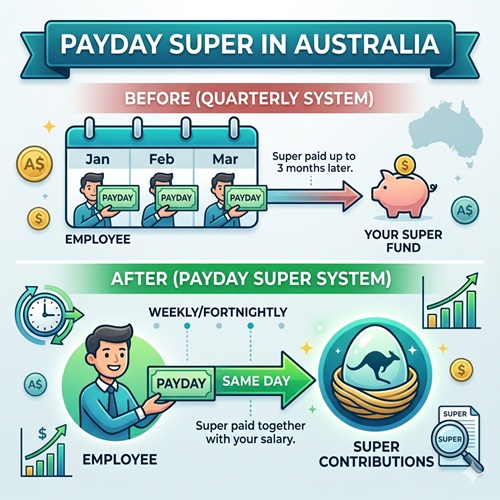
The key reform is the shift from quarterly super payments to payments made alongside wages. Employers will be required to pay superannuation contributions at the same time as salary and wages, with funds reaching employees’ accounts within seven days of payday.
This replaces the current system where super is paid at least every three months.
In addition, several supporting changes will take effect:
- The closure of the Small Business Superannuation Clearing House (SBSCH) from 1 July 2026.
- Increased ATO visibility through Single Touch Payroll reporting, allowing near real-time monitoring of compliance.
- Updated penalties for late payments, including interest and administrative uplifts tied to the shortfall.
- It’s also important to note that the Super Guarantee rate will already be at 12%, following its final increase on 1 July 2025.
Impact on Small Businesses
For small businesses, the shift to payday super is primarily a cash flow and administrative change.
- Cash Flow Pressure
Instead of holding super payments for up to three months, businesses will need to pay them weekly, fortnightly, or monthly – depending on payroll cycles. This reduces flexibility and may tighten working capital.
- Increased Administrative Workload
More frequent payments mean more processing, reconciliation, and reporting. Businesses that relied on quarterly batching will need more efficient systems.
- Technology and System Upgrades
With the closure of the SBSCH, businesses must adopt alternative clearing systems or payroll software that meets SuperStream requirements.
- Higher Compliance Risk
With real-time ATO oversight, late or missed payments will be identified quickly, increasing the risk of penalties.
How Small Businesses Can Prepare
Preparation is critical to avoid disruption. Key steps include:
- Review Cash Flow Planning
Adjust budgets and forecasting to accommodate more frequent super payments. Building a buffer will help manage tighter cycles.
- Upgrade Payroll Systems
Ensure payroll software can automate super payments each pay run and integrate with reporting requirements.
- Identify a New Clearing Solution
With the SBSCH closing, businesses should research alternative super payment platforms or work with their accountant/bookkeeper.
- Train Staff and Update Processes
Internal payroll processes may need redesigning to ensure compliance within tight timeframes.
- Engage Advisors Early
Accountants and payroll specialists can help test systems, review obligations, and ensure a smooth transition.
Summary
While the reforms aim to improve transparency and ensure employees are paid their entitlements sooner, they represent a meaningful shift for small businesses. Those who plan early, particularly around cash flow and systems, will be best positioned to adapt efficiently and avoid costly penalties.
For More Information about the upcoming changes please CLICK HERE