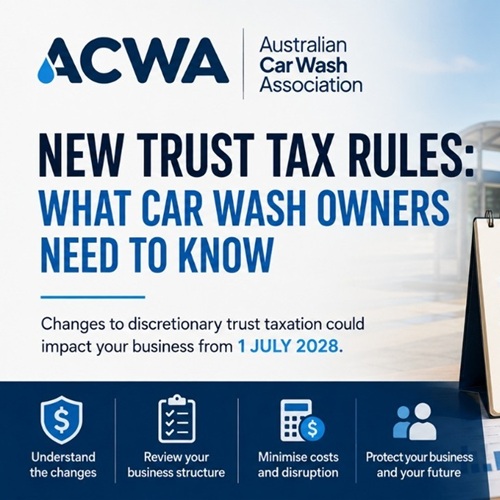
Changes to the taxation of discretionary trusts could have significant implications for some car wash owners and operators. Understanding the changes now will help businesses plan ahead and minimise potential costs.
From 1 July 2028, the Australian Government will introduce a minimum 30% tax rate on the taxable income of discretionary trusts, subject to specific exemptions. The Government estimates that more than 90% of Australia’s small businesses will not be affected in any given year, but businesses operating through discretionary trust structures should review their position.
What does this mean for car wash businesses?
Many established car wash businesses use trusts and companies as part of their ownership structure for legitimate commercial reasons, including asset protection, succession planning and managing business income.
The new rules could increase the tax payable where a discretionary trust distributes income, particularly where profits are distributed to a company beneficiary. In some circumstances, this may make an existing structure less tax-effective.
For car wash operators, the potential impact is particularly important because businesses can have substantial investments in land, buildings, equipment, plant, infrastructure and goodwill.
The cost of restructuring
If an existing business decides its current structure is no longer appropriate, restructuring may involve significant professional and transaction costs.
These can include accounting and legal advice, valuations, refinancing, changes to insurance and licences, and potential capital gains tax and state-based stamp duty. Business groups have raised concerns that stamp duty could become a significant additional cost where assets must be transferred simply because of the federal tax changes.
The Government has announced three years of rollover relief from 1 July 2027 to assist eligible small businesses that choose to restructure, but state stamp duty remains an important issue for businesses to consider.
What should operators do now?
Don’t wait until 2028. Operators should speak with their accountant or tax adviser now to:
- Confirm whether their business operates through a discretionary trust.
- Understand how the new rules could affect their specific circumstances.
- Review whether profits are distributed to a company beneficiary.
- Identify the potential tax, CGT and stamp-duty consequences of restructuring.
- Review business succession and asset-protection arrangements.
- Monitor further legislation and any state-government concessions.
Importantly, operators should not restructure simply because of the announcement. The final rules, exemptions and transition arrangements should be assessed with professional advice before any ownership changes are made.
An issue ACWA will continue to monitor
The Australian Car Wash Association will continue to monitor these changes and advocate for practical arrangements that minimise unnecessary compliance costs and financial impacts on legitimate small businesses.
For an industry already facing rising costs across wages, energy, water, insurance and compliance, avoiding unnecessary additional taxation and red tape is important to the future viability and continued investment of Australian car wash businesses.
This article is provided for general information only and should not be regarded as taxation or financial advice. Operators should seek advice specific to their individual circumstances.